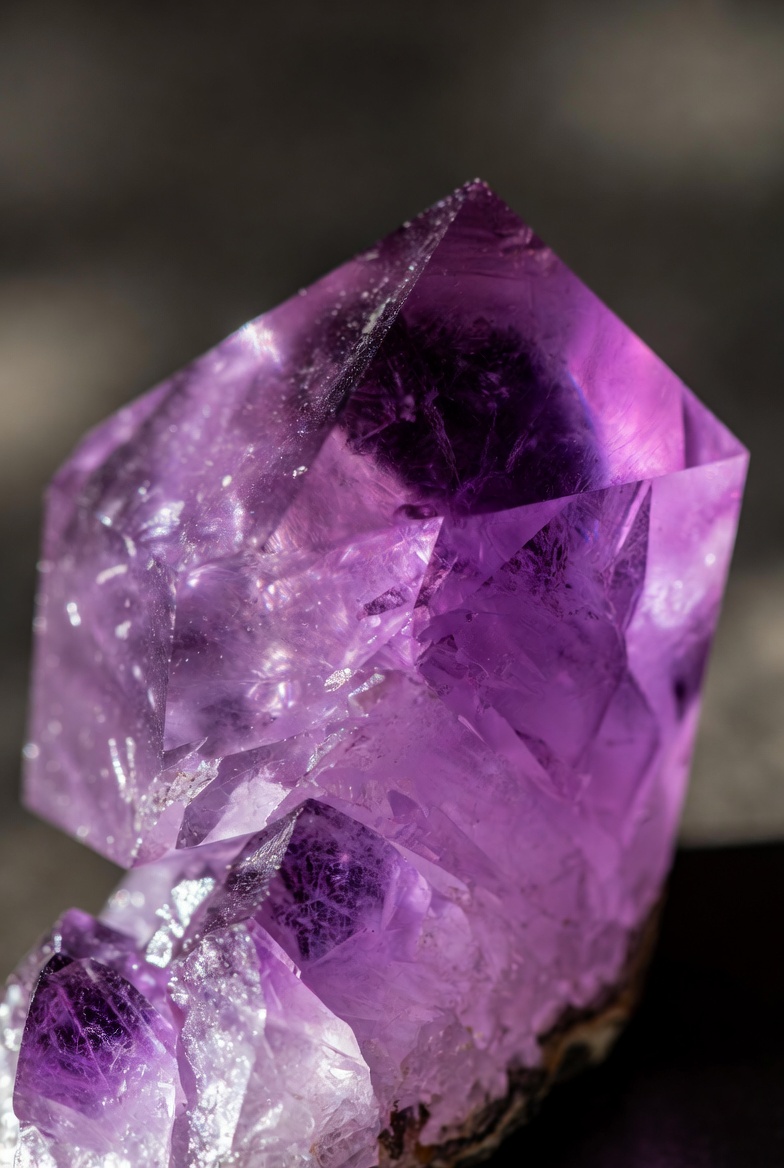
Amethyst
Semi-Precious · Quartz Family
Spiritual protection and deep calm — quiets the mind and opens intuition.
- Calm
- Intuition
- Protection
- Clarity
- Sobriety
- Dreams
Amethyst is a violet variety of quartz prized since antiquity by cultures from ancient Egypt to Greece, who believed it prevented intoxication. Its name comes from the Greek 'amethystos' meaning 'not drunk'. One of the most universally beloved healing crystals, it ranges from pale lilac to deep rich purple.
- Healing
- Depression, Anxiety, Insomnia, Headaches, Addiction
- Everyday uses
- Historically used as a gemstone in royal jewellery and religious artefacts across Europe and Asia. Ancient Greeks and Romans crafted wine goblets from amethyst believing it prevented drunkenness. Used in ecclesiastical jewellery — bishops' rings are traditionally set with amethyst. Decorative ornamental carvings, figurines, and luxury home décor objects. Used in colour therapy and meditation spaces for its calming violet light spectrum.
- Spiritual meaning
- Amethyst is deeply connected to the crown and third eye chakras, making it exceptional for meditation and spiritual growth. It is renowned for easing depression, anxiety, and grief by soothing the nervous system. It supports restful sleep, reduces nightmares, and helps those recovering from addiction by promoting mental clarity and self-control.
- Formation
- Amethyst forms inside volcanic rocks called basalt geodes. Silica-rich hydrothermal fluids fill cavities in the rock, and as they cool slowly over thousands of years, quartz crystals grow inward. The purple colour comes from iron impurities and natural irradiation within the earth.
- Where it is found
- The largest deposits are in Brazil (Rio Grande do Sul) and Uruguay, where geodes can be taller than a person. Other significant sources include Zambia, Madagascar, South Korea, Russia, and the United States (Arizona).
- Zodiac
- Pisces, Aquarius, Capricorn, Virgo
- Chinese element
- Ox, Rat, Dragon, Rabbit