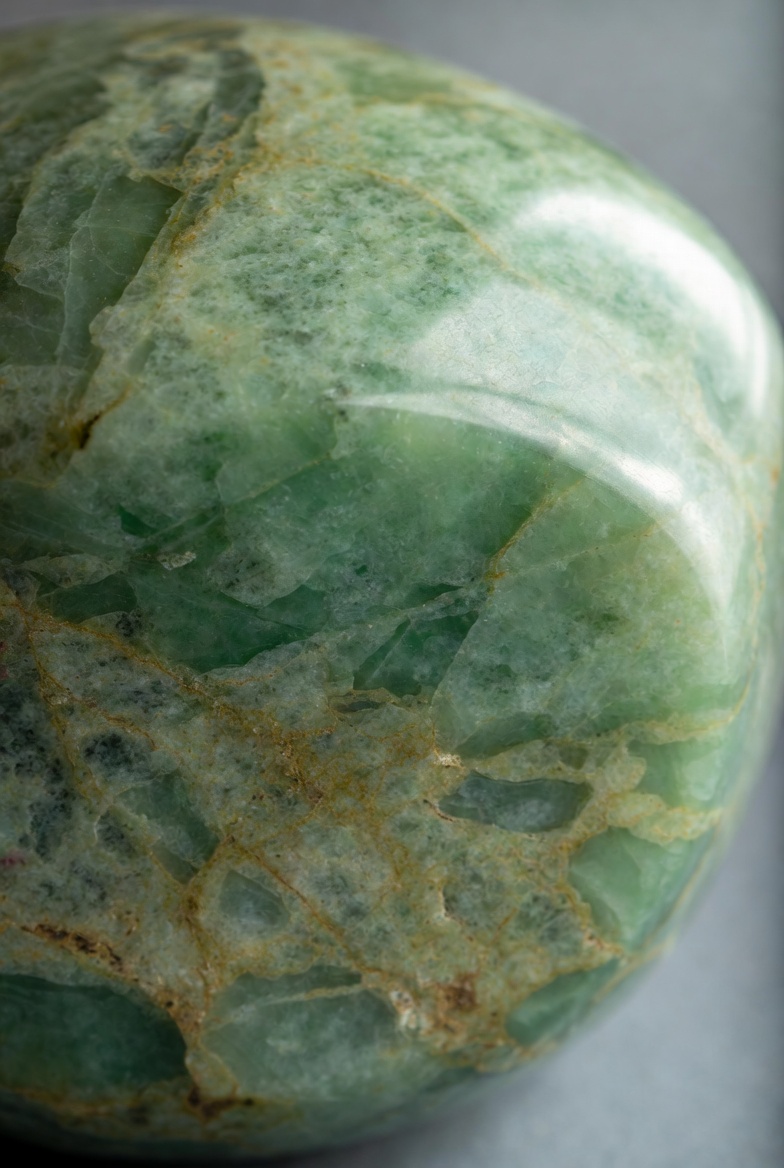
Jade
Precious · Nephrite
The imperial stone of wisdom, prosperity and eternal protection.
- Wisdom
- Prosperity
- Longevity
- Harmony
- Protection
- Nobility
Jade is a term used for two distinct minerals: nephrite and jadeite. Chinese civilisation has revered jade for over 7,000 years — it was more valuable than gold and represented heaven and virtue. The Maori of New Zealand used it for sacred weapons and tools.
- Healing
- Kidney Health, Immunity, Emotional Balance, Prosperity, Longevity
- Everyday uses
- China: jade has been central to Chinese art for 7,000 years — burial suits, ritual vessels, the imperial seal (yu xi), and carvings of all kinds. New Zealand Maori: pounamu (greenstone) was used for hei tiki (pendants), weapons (mere), and tools. Jade rollers for facial massage — one of the most popular modern beauty tools worldwide. Mesoamerican cultures (Maya, Aztec, Olmec) valued jadeite above gold for religious and royal use. Modern use: fine jewellery, decorative objects, and luxury collectibles.
- Spiritual meaning
- Jade is a stone of serenity, wisdom, and deep connection to life-force energy. In Chinese medicine, it is believed to strengthen kidney energy — the foundation of vitality and longevity. It brings harmony to all relationships, attracts good fortune and abundance, and provides gentle protective energy throughout life.
- Formation
- Nephrite jade forms in metamorphic rocks through the alteration of serpentinite — when magnesium-rich rocks are subjected to high pressure during tectonic movements. The interlocking fibrous crystal structure makes nephrite extremely tough — tougher than steel.
- Where it is found
- The finest nephrite comes from Xinjiang, China (Hetian or Hotan jade). New Zealand pounamu (greenstone) is culturally significant to the Maori. Other sources include Russia (Siberia), Canada (British Columbia), Australia, Taiwan, and the USA.
- Zodiac
- Taurus, Libra, Aries, Gemini
- Chinese element
- Dragon, Snake, Rooster, Ox, Rat