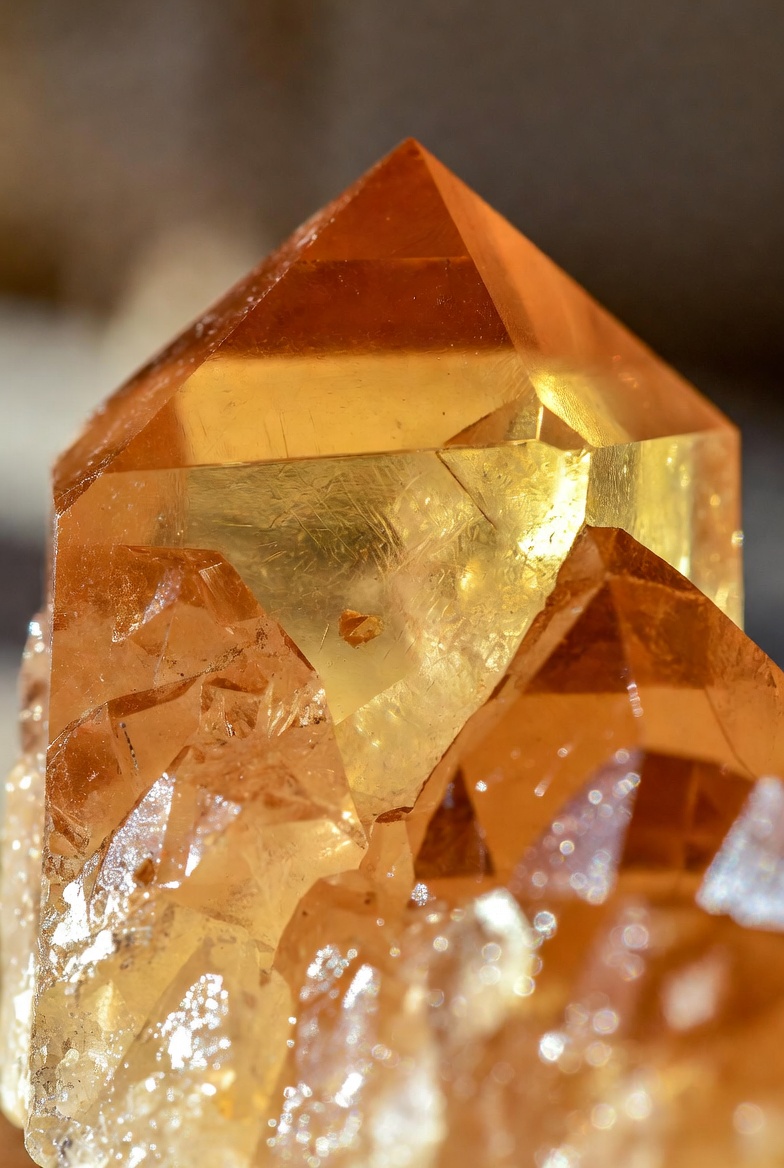
Citrine
Semi-Precious · Quartz Family
The merchant's stone of abundance, joy and solar energy.
- Abundance
- Joy
- Prosperity
- Energy
- Confidence
- Success
Citrine is a golden-yellow variety of quartz, its warm colour caused by traces of iron. Natural citrine is relatively rare; most on the market is heat-treated amethyst. The Scots prized citrine in the handles of daggers as a symbol of strength. It is the November birthstone.
- Healing
- Depression, Low Energy, Digestive Issues, Confidence, Motivation
- Everyday uses
- One of the most popular gemstones for jewellery — rings, pendants, earrings across all price points. Known as the 'merchant's stone', it is traditionally kept in cash registers and workplaces to attract prosperity. Used in Feng Shui wealth corners of homes and offices. Collectors' specimens and decorative mineral displays.
- Spiritual meaning
- Citrine is exceptional for combating depression and low motivation, as it carries the warming, optimistic energy of sunlight. It activates the solar plexus chakra, building self-confidence and creativity. Unlike most crystals, citrine is said to never hold negative energy and never needs cleansing.
- Formation
- Natural citrine forms in the same hydrothermal environments as quartz but with iron-rich fluids. Most commercial citrine is produced by heating amethyst to 470–560°C, which changes its purple iron compounds to yellow ones — mimicking what happens deep within the earth.
- Where it is found
- Natural citrine is rare, found primarily in Brazil (Minas Gerais), Madagascar, Spain, and Russia. Bolivia produces a beautiful bicolour citrine-amethyst called ametrine.
- Zodiac
- Aries, Gemini, Leo, Libra
- Chinese element
- Tiger, Horse, Monkey, Rooster