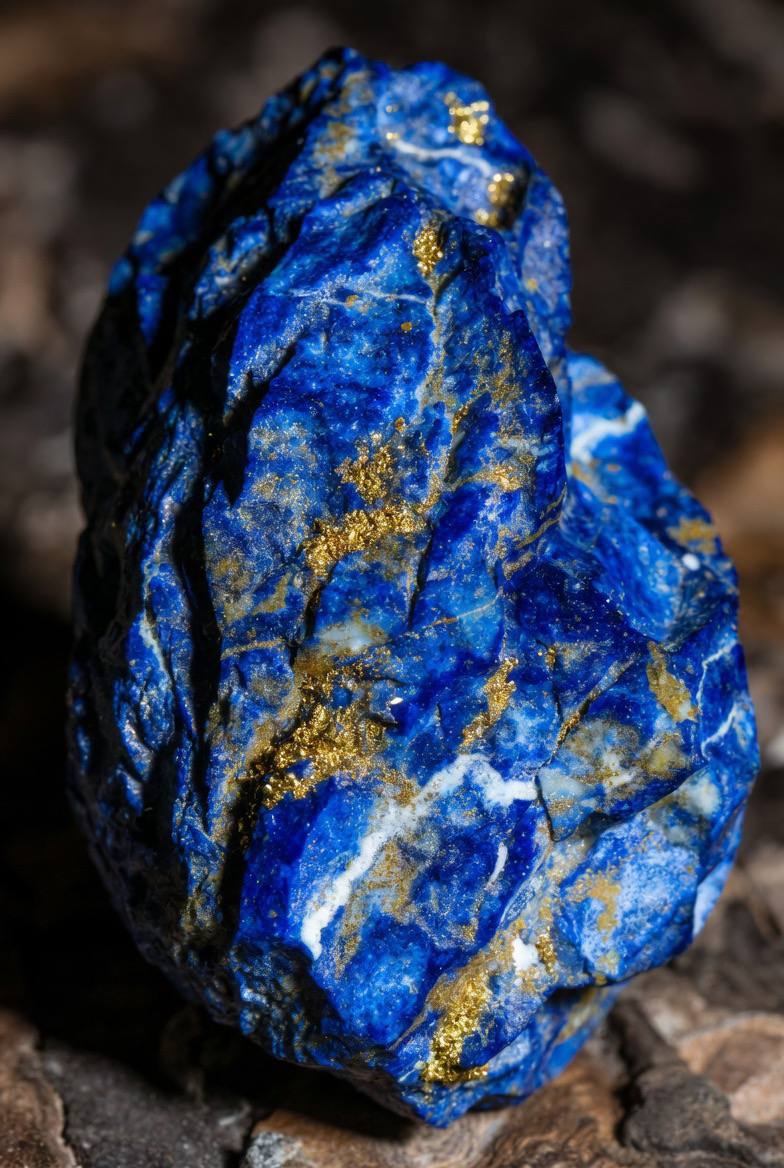
Lapis Lazuli
Semi-Precious · Metamorphic Stone
The ancient stone of wisdom, truth and royal power.
- Wisdom
- Truth
- Communication
- Royalty
- Confidence
- Vision
Lapis lazuli is a deep-blue metamorphic rock prized since antiquity. It was mined in Afghanistan over 6,000 years ago and traded along ancient routes to Egypt, Mesopotamia, Greece, and Rome. Ground into powder, it became ultramarine — the most expensive pigment in medieval Europe, used to paint the Virgin Mary's robes.
- Healing
- Depression, Communication Blocks, Migraines, Thyroid, Self-expression
- Everyday uses
- Ultramarine pigment: ground lapis was the source of history's most prized blue paint — used in Vermeer's 'Girl with a Pearl Earring' and Michelangelo's Sistine Chapel. Ancient Egyptians used lapis in royal jewellery, sarcophagi, and the funeral mask of Tutankhamun. Cosmetic use: Cleopatra ground lapis into eyeshadow pigment. Luxury ornamental objects: bowls, boxes, vases, and architectural inlay in palaces.
- Spiritual meaning
- Lapis lazuli powerfully activates the throat and third eye chakras, making it the supreme stone for communication, self-expression, and speaking one's truth. It helps those who struggle to communicate emotions, suffer from social anxiety or depression rooted in unexpressed feelings.
- Formation
- Lapis lazuli is not a single mineral but a rock composed mainly of lazurite (which gives the blue), with calcite (white veins), pyrite (gold flecks), and other minerals. It forms by contact metamorphism — when magma intrudes into limestone under intense heat and pressure over millions of years.
- Where it is found
- Afghanistan's Sar-e-Sang mine in Badakhshan province has been the world's primary source for over 6,000 years. Other sources include Chile (Atacama desert), Russia (Lake Baikal region), and Canada.
- Zodiac
- Sagittarius, Aquarius, Pisces, Libra
- Chinese element
- Ox, Rat, Rabbit, Dragon